Put Down the Ring Light: Why Arts Educators Are Begging Parents to Let Kids Just Make Stuff
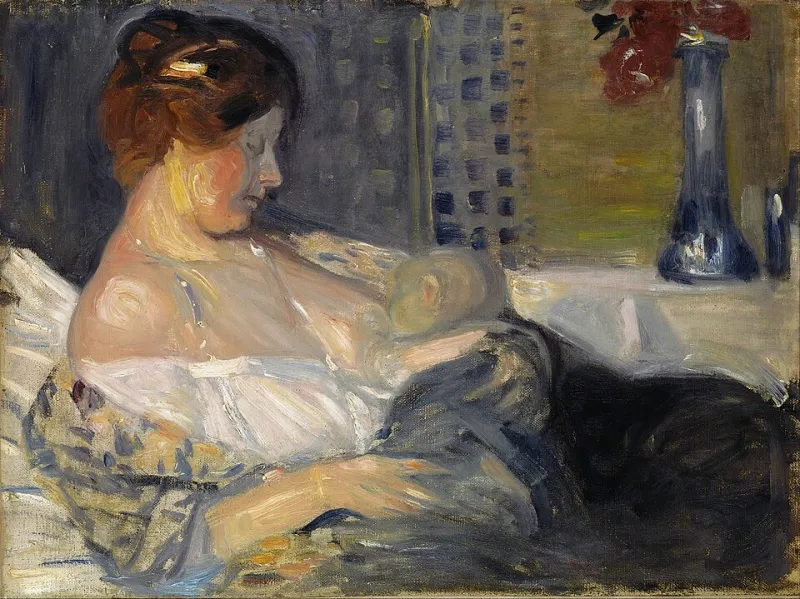
Photo: Janis Rozentāls (1866 - 1916) – Creator (Latvian) Details on Google Art Project, Public domain, via Wikimedia Commons
Let me describe a scene that probably sounds familiar.
A nine-year-old finishes a painting she's genuinely proud of. Before the paint is even dry, a parent — loving, well-meaning, enthusiastic — pulls out a phone and says, "Let's post this!" Within an hour, the painting has 47 likes on Instagram. The kid checks the number. Then checks again. By the next afternoon, she's asking her parent what kind of painting gets the most likes.
This is not a horror story. Nobody is being harmed in any obvious way. But something subtle has shifted in that moment — something that arts educators around the country are increasingly alarmed about, and that doesn't have an easy fix.
The Creator Economy Came for the Crayon Set
Over the past five years, the logic of the creator economy — build an audience, grow engagement, monetize your output — has seeped into places it was never really meant to go. Youth sports have had this conversation for decades. Now it's arts and creativity's turn.
Kids who draw, paint, sculpt, write, or play music are increasingly encouraged — sometimes explicitly, sometimes through ambient cultural pressure — to treat their creative work as content. TikTok is full of young artists doing time-lapse videos of their sketchbooks. YouTube has entire ecosystems of child artists with subscriber counts in the hundreds of thousands. And while there are genuinely inspiring stories in that world, arts educators are noticing something troubling underneath the surface.
"When a child starts making art for an audience rather than for themselves, the whole orientation of the activity changes," says Tamara Hollis, who has taught visual arts in public schools in Atlanta for over two decades. "They stop experimenting. They stop making 'bad' work, which is where all the real learning happens. They start self-editing before they've even begun."
This isn't just a theory. Research in developmental psychology has long established that extrinsic motivation — doing something for external rewards like likes, views, or praise — tends to crowd out intrinsic motivation over time. You can love drawing for its own sake, or you can love the validation that drawing gets you. Holding both at the same time is harder than it sounds, especially for a developing brain.
Parents Caught in the Middle
It would be easy — and unfair — to frame this as parents doing something wrong. Most of the parents navigating this tension are doing it with genuine care and genuine confusion.
Take Priya Nair, a mom in Austin whose 11-year-old son has a real gift for digital illustration. When he started posting his work online, the response was overwhelming and positive. Followers, comments, other young artists reaching out. "It was beautiful to watch," she says. "He felt seen in a way that's hard to replicate."
But over the past year, she's noticed him getting anxious when a post doesn't perform well. He's started asking whether certain subjects are "more popular" before he draws them. "I didn't set out to create that. I don't know exactly when it happened. But I feel responsible for it, and I'm not sure how to walk it back."
Nair has started limiting how often her son posts and actively encouraging him to keep a private sketchbook that nobody sees. "It's helped a little. But the pull of the platform is strong. He knows what engagement feels like now. That's hard to un-know."
What Community Arts Education Offers Instead
This is where organizations rooted in community-based arts education are doing some of their most important work — even if they don't always frame it that way.
At a nonprofit arts center in Philadelphia, kids' classes are explicitly structured around process rather than product. There are no grades, no showcases, and — crucially — a standing policy against photographing student work mid-class. "We want the making to be the point," says program director Leo Castillo. "The second a kid thinks someone's watching, something changes in the room. You can feel it."
Castillo says he's had to have more conversations with parents in recent years about why the center doesn't post kids' work on social media without explicit discussion and consent. "Some parents get frustrated. They want to see what their kids are doing, which is totally understandable. But we've found that when kids know their work might be shared publicly, they make safer choices. Less risk. Less weirdness. Less of the stuff that actually matters."
The community arts model — which prioritizes participation, exploration, and belonging over output and audience — is quietly positioned as a counterweight to the creator economy's reach into childhood. But it requires advocates willing to make the case for why some things shouldn't have an audience.
Raising Kids Who Create for the Right Reasons
None of this means kids shouldn't share their work, shouldn't feel proud of it, or shouldn't engage with digital platforms at all. The goal isn't to raise children in a creativity vacuum. It's to protect the internal life of their creative practice long enough for it to develop roots before the world starts pulling on it.
Hollis puts it simply: "The kids who grow up to be artists — real, sustained, resilient artists — are almost always the ones who had some years of making things just because making things felt good. That foundation is harder to build if you've been optimizing for an audience since you were eight."
For parents, the ask is genuinely hard: resist the impulse to turn your kid's creativity into a shareable moment, even when it's tempting and even when they're asking you to. Give them a sketchbook that stays in their room. Sign them up for a community class where the work stays in the room. Let them make ugly, confusing, brilliant, pointless things for absolutely no one.
That's not a step backward. It might be the most progressive thing you can do.