Confetti Is the Easy Part: What a Local Arts Scene Looks Like in February
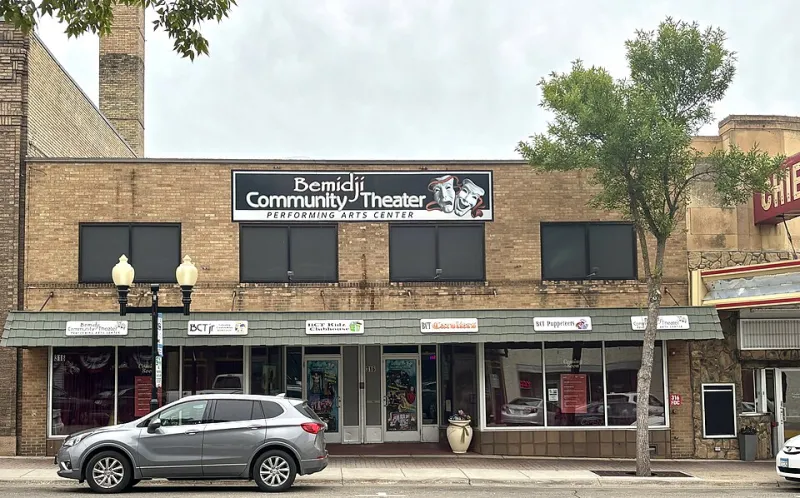
Photo: Myotus, CC BY 4.0, via Wikimedia Commons
I have watched a town fall in love with itself over a single weekend. You probably have too. Bunting on the lampposts, a stage in the parking lot, a local painter selling out of her prints by Saturday afternoon, three hundred people who have lived within a mile of each other for a decade suddenly learning each other's names.
And then Monday comes. The bunting gets taken down. The porta-potties get hauled away. And everyone goes back to their lives, slightly buzzed on civic pride, assuming that whatever happened will happen again next year because it was so obviously good.
That assumption is how scenes die.
The weekend economy of attention
Festivals are great at one thing: concentrating attention. They're terrible at everything else. They don't fix the leaky roof at the arts center. They don't replenish the volunteer list. They don't answer the email from the parent who wants to know if there's a teen program in March.
What they do is create the feeling of momentum, which is not the same as momentum. A scene can have three wildly successful festivals and still be one burned-out board treasurer away from folding.
I've come to think of it like this: a festival is a fireworks show, and a scene is the fire department. One is thrilling and visible. The other is the reason anything survives.
Who patches the mural
Every town that has ever commissioned a mural has also had this conversation, usually about eighteen months later, usually in a Facebook comment thread: who's supposed to fix that?
Murals fade. They get tagged. Someone backs into the corner of one with a box truck. And the original artist — who was paid once, three years ago, for a piece that is now a permanent civic landmark — gets a phone call asking if she can come touch it up for free.
The honest answer is that upkeep should have been in the contract, with money attached. The more common answer is that it wasn't, and now a volunteer is out there with a color-matched paint sample, hoping for the best.
This is the least glamorous sentence in this article: if your community's public art doesn't have a maintenance line item, it doesn't have a future. It has a countdown.
The volunteer pipeline is a leaky bucket
Every festival has a volunteer coordinator who is, without exaggeration, holding the entire event together with a clipboard and sheer force of will. And every year, that person asks the same question: where did everyone go?
The problem isn't that people don't care. It's that we ask them to care in one giant unsustainable burst once a year and give them nothing to do in between. So they drift. They stop checking the email. Then the next festival rolls around and the coordinator is cold-calling strangers.
What actually builds a pipeline is unremarkable: recurring shifts, small asks that last two hours instead of two weeks, a handwritten thank-you in August, and clear roles that don't require someone to already be an insider. Scene veterans forget how much of this was learned, not innate. A new person doesn't know that you just walk into the back room and grab a name tag. Someone has to tell them.
Program for the people who didn't come
Here's the trap of festival math: the turnout is enormous, so the programming gets built around people who show up to big free outdoor events. Which is fine, except those are often the same people who need the least from you.
The test of a scene is what's on the calendar on a rainy Wednesday in February, when there's no band, no beer tent, and no reason for anyone to be out. Is there an open studio? A critique group? A figure drawing session with a model and a space heater? A night where teenagers can be loud in a room that isn't a parking lot?
If the answer is nothing, that's not failure — it's a decision nobody made on purpose. Year-round programming doesn't require a huge budget. It requires someone to look at January, notice it's blank, and put something in it.
Follow-through is a skill, not a personality trait
The artists I know who keep scenes alive share a mundane trait: they answer emails. They confirm the date twice. They send the invoice. They remember that the sound person needs a parking pass.
This is unsexy and it is everything. A thousand brilliant ideas die every year because nobody booked the room. Meanwhile, some deeply average program keeps running for a decade because one person put it in the calendar and showed up.
If you're an organizer trying to build a team, stop looking for visionaries. Look for the person who says “I'll handle the permits.” That person is your whole organization.
The unglamorous ask
So here's what I'd want every arts booster in America to hear this winter: your scene needs money for toner and liability insurance and a spreadsheet that someone actually maintains. It needs a fund for artist stipends that pays the same week as the event, not six months later. It needs a second set of keys. It needs someone to update the website.
None of that fits on a banner. All of it is what separates a place that hosts a festival from a place where art is genuinely part of daily life.
The confetti is a nice photograph. The maintenance is the movement.