You Snooze, You Lose Your Studio: The Hidden Waitlist Crisis Inside America's Creative Spaces
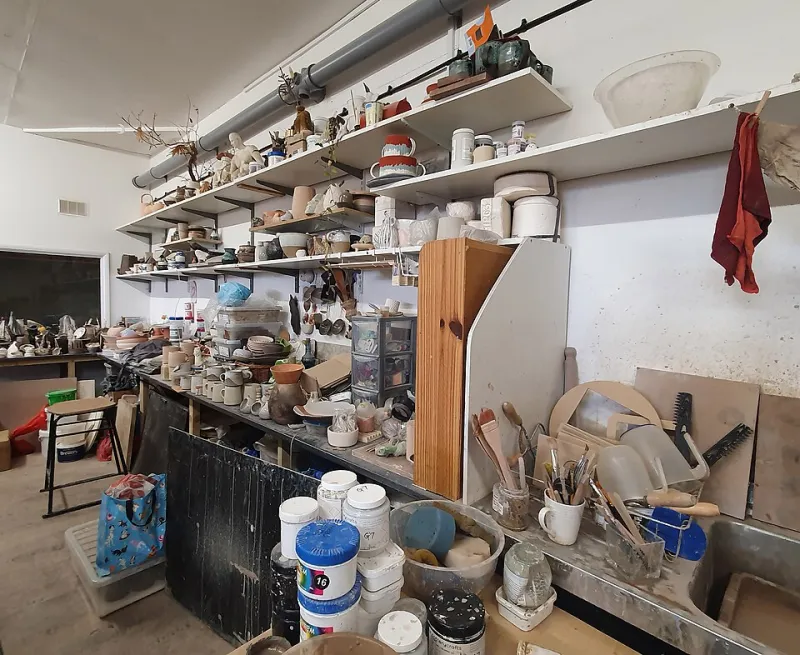
Photo: Mutney, CC BY 4.0, via Wikimedia Commons
Marcus Reid has a Google Calendar reminder set for every first Monday of the month. It's not for a meeting or a dentist appointment. It's to check whether the ceramics studio two miles from his apartment in Columbus, Ohio has opened any new slots. It hasn't — not for the last fourteen months.
"At this point it's basically a joke between me and my roommates," he says. "I refresh the page, nothing's changed, I close the laptop." Reid is a hobbyist-turned-serious ceramicist who's been on the waiting list at his local community arts center since the spring of 2023. He's not alone. Not even close.
Across the country, community studios, maker spaces, and arts venues are drowning in demand. Residency programs that once struggled to fill cohorts are now turning away dozens of qualified applicants per open seat. Shared woodworking shops, darkrooms, textile studios, and recording spaces that used to feel like well-kept neighborhood secrets have become some of the most competitive real estate in American creative life. And the wait to get in? Sometimes measured in years.
How Did We Get Here?
The pandemic is the obvious starting point. When people were locked inside and stripped of their usual routines, a significant chunk of the US population rediscovered — or discovered for the first time — a need to make things with their hands. Sourdough bread got all the press, but ceramics classes, printmaking workshops, and community darkrooms saw the same surge once they reopened.
But the demand didn't cool down when the world reopened. If anything, it accelerated. Arts educators and venue directors point to a few overlapping forces: a broader cultural burnout with passive screen consumption, growing interest in analog skills as a counter to digital overwhelm, and the rising influence of the "slow living" movement, which prizes handmade and tactile creativity. Add in the fact that many commercial arts spaces shuttered permanently during the pandemic — eliminating supply just as demand was exploding — and you've got a capacity crisis that nobody quite planned for.
"We went from having a waitlist of maybe 20 people to a waitlist of over 200 in about 18 months," says Denise Fuentes, director of a community arts center in Albuquerque. "We didn't change our programming. The world changed around us."
The Strategic Artist
For working and aspiring artists, navigating this new landscape requires a level of advance planning that would have seemed absurd five years ago. Jess Okafor, a fiber artist based in Detroit, keeps a running spreadsheet of every studio, co-op, and residency program she's interested in — including their typical application windows, notification timelines, and whether they offer rolling admissions or annual cohorts.
"It sounds obsessive, but it's just become part of the job," she says. "I applied to three residencies last fall knowing I probably wouldn't hear back until spring at the earliest. You have to think 12 to 18 months out now. It's changed how I plan my whole practice."
Okafor got into one of the three. She's still waiting to hear on another. The third already closed its waitlist.
This kind of long-horizon planning is increasingly common among mid-career artists, but it creates obvious disadvantages for people who are newer to the field, less networked, or dealing with the unpredictability that comes with lower income, caregiving responsibilities, or unstable housing. If you can afford to plan a year ahead, the system rewards you. If you can't, it quietly filters you out.
Democratization or a New Door with a Fancier Lock?
Here's the tension that makes this whole conversation complicated: community arts spaces were largely built on the premise of removing gatekeeping. No gallery representation required. No MFA necessary. Just show up, pay a modest membership fee, and make your work. That spirit hasn't disappeared — but it's getting squeezed.
When spaces are oversubscribed, they have to make choices. Some prioritize first-come, first-served waitlists, which sounds fair until you realize that the people best positioned to snag spots the moment they open are often those with the most flexibility and the most information. Others use jury or application processes, which can introduce the exact kind of credentialing culture these spaces were built to circumvent.
"We've had some really hard internal conversations," admits Fuentes. "Do we prioritize people who've never had access to studio space before? Do we weight applications from underserved zip codes? There's no clean answer. Every choice has tradeoffs."
Some spaces are getting creative. A handful of community studios in cities like Portland, Baltimore, and Minneapolis have experimented with time-limited memberships — capping how long any single person can hold a spot — to keep turnover moving. Others have launched satellite programming in libraries, community centers, and schools to expand their footprint without waiting for a new building.
The Bigger Picture
What the waitlist economy ultimately reveals is something worth celebrating, even as we wrestle with its complications: Americans are hungry to make things. Not content. Not product. Things. Objects, images, sounds, and structures that exist because someone needed to bring them into the world.
That hunger is real, it's widespread, and it's not going anywhere. The question for organizations like community arts centers — and for the civic leaders and funders who support them — is whether we're going to meet that demand with the infrastructure it deserves, or whether we're going to let scarcity quietly recreate the hierarchies we set out to dismantle.
For Marcus Reid, the ceramics studio waitlist is still right there on his calendar. He's started driving to a neighboring suburb on weekends, where a smaller co-op has slightly shorter waits. It's not ideal. But he's making pots, and that's what matters.
"I'll get in eventually," he says. "I just wish the system made it easier for people who don't have the time to play the long game."