Art in the In-Between: The Vacant Storefronts Being Claimed by Creators Who Can't Wait for Permission
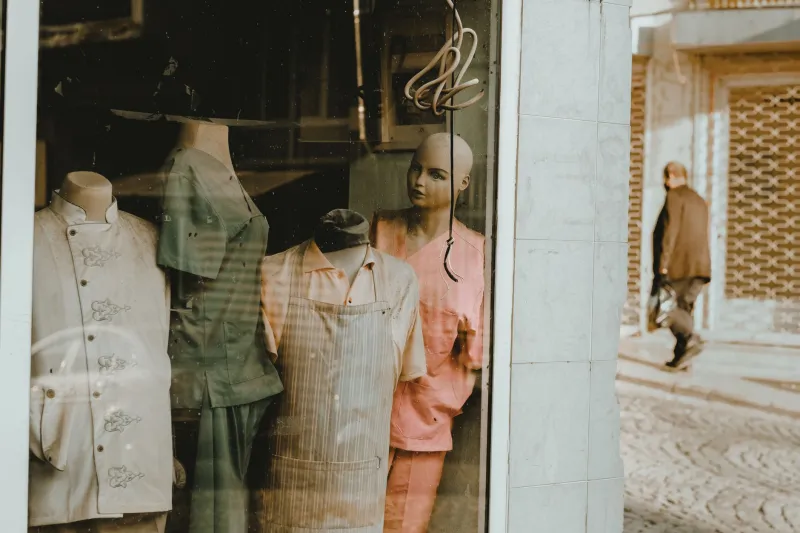
Walk down the main commercial strip of almost any mid-sized American city right now and you'll see them: the paper-covered windows, the darkened interiors, the "For Lease" signs that have been there long enough to fade. Empty storefronts are one of the defining visual features of post-pandemic urban life in the US, a landscape of economic uncertainty that stretches from downtown Detroit to the strip malls of Albuquerque.
But look closer — or come back on a Saturday evening — and you might find something else entirely happening inside those spaces. A photography show hung on freshly painted drywall. A sculpture installation lit by clip-on LED strips. A zine library set up on folding tables, with someone's playlist drifting out through a cracked door.
Artists have figured out that the in-between is actually a pretty interesting place to make things happen.
The Geography of Vacancy
The numbers tell a stark story. Retail vacancy rates in many US cities remain significantly elevated compared to pre-2020 levels, with some downtown corridors sitting at 20 to 30 percent empty. Office buildings in mid-tier cities have fared even worse, with remote work reshaping commercial real estate in ways that haven't fully shaken out yet.
For property owners, this is a headache. For artists priced out of traditional gallery and studio space, it's something else: opportunity.
"The first time I walked into the space, there was still a Subway sandwich menu on the wall," says Priya, a mixed-media artist and organizer based in Providence, Rhode Island. She and a loose collective of five other artists approached a local landlord about using a vacant retail unit for a six-week pop-up exhibition. The pitch was simple: they'd clean it up, pay a nominal amount, and bring foot traffic to a dead block. The landlord said yes mostly because he had nothing to lose.
The show they put up — a community-centered exhibition exploring neighborhood change — drew more visitors than the space had seen in years. "People kept coming in saying they'd walked past that block for two years and never had a reason to stop," Priya recalls.
A Different Kind of Gallery
What makes these liminal spaces distinct from conventional galleries isn't just the economics — it's the aesthetic and cultural permission they carry. A white-cube gallery in a tony neighborhood sends signals before you even open the door: about who belongs there, what kind of art will be inside, what the price tags might look like.
An empty storefront doesn't carry that baggage. It's neutral in a way that established institutions rarely are.
"There's something about the rawness of the space that changes how people interact with the work," says Terrell, a photographer and community arts facilitator in Memphis. He's organized several short-term exhibitions in vacant commercial properties over the past few years, deliberately choosing spaces in neighborhoods that don't typically host gallery events. "When you put art in a space that still has scuff marks on the floor and a drop ceiling, people don't feel like they need to whisper. They touch things. They talk to each other. It's a completely different energy."
That energy is part of what's drawing artists to these spaces even when traditional opportunities exist. The liminal gallery doesn't ask you to fit into an existing program or curatorial vision. You build the thing from scratch, which is terrifying and liberating in roughly equal measure.
The Cat-and-Mouse of It All
It's not always a clean arrangement, though. The relationship between artists using transitional spaces and the landlords, city officials, and developers who control them is genuinely complicated — and sometimes adversarial.
Building code issues are real. Insurance requirements can be prohibitive. Some cities have zoning rules that technically prohibit temporary art use in commercial spaces without permits that take longer to obtain than the pop-up itself would last. And landlords who initially seem enthusiastic about the arrangement sometimes change their minds when the space gets attention, suddenly deciding they'd rather hold out for a paying tenant.
"We had a situation where a developer basically showed up mid-installation and told us our lease agreement — which was verbal, which was our mistake — wasn't valid," says Dominique, an artist and curator in Kansas City who's been navigating the vacant-space landscape for several years. "We had two days to move everything out."
These are the real risks of working in the in-between. The impermanence that makes these spaces feel free is also what makes them precarious. There's no security, no lease protection, no guarantee that the show you spent three weeks building will be up long enough for people to see it.
And yet artists keep doing it. Because the alternative — waiting for a conventional gallery to say yes, saving up for a proper studio, applying for grants that may or may not come through — can feel like waiting for a permission that's never quite granted.
What Happens When the Lease Runs Out
The temporary nature of these spaces does something interesting to the art inside them, too. When everyone knows the show has an end date — when the work might come down in three weeks because the landlord found a tenant — it creates a kind of urgency that permanent galleries rarely replicate.
"People come back multiple times because they know it's not going to last," Priya says. "That's actually powerful. It makes the experience feel more alive."
Some cities have started formalizing these arrangements, creating programs that match artists with vacant properties and provide some legal scaffolding for short-term creative use. Philadelphia, Detroit, and Oakland have all experimented with versions of this model, with mixed but largely encouraging results. When it works, it's a genuine win for everyone: landlords get foot traffic and maintenance presence, artists get space, neighborhoods get activation, and culture gets made somewhere new.
But the most exciting version of this trend doesn't wait for city programs to formalize it. It's the artist who walks into a landlord's office with a proposal and a handshake, who builds something in a space that smells like old carpet and possibility, and who makes the neighborhood stop and look — even if just for a little while.
The in-between isn't just a gap between what was and what's coming. For a growing number of American artists, it's exactly where they want to be.