They Left. Then They Came Back. Now Everything's Different.
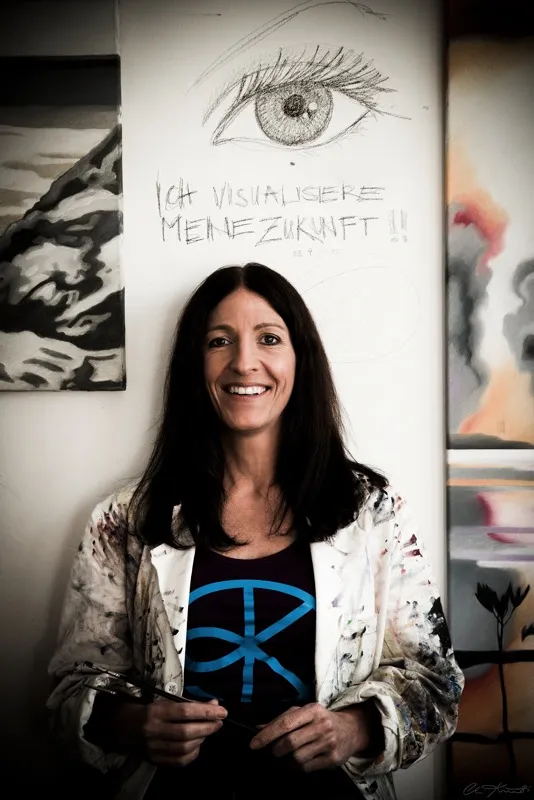
Photo: Roland Weber, CC BY-SA 3.0, via Wikimedia Commons
There's a particular kind of phone call that arts administrators in smaller American cities have started getting more frequently. An established photographer, or a choreographer, or a novelist calls to ask about studio space, or whether the local arts center has a residency program, or just to introduce themselves. They mention that they've recently moved back to town. They grew up here. They've been in Brooklyn, or San Francisco, or Chicago for fifteen years. And now they're back.
This is happening more than you might think. And it's quietly rewriting the creative landscape of communities that have spent decades watching their most ambitious young artists leave.
The Exodus That Defined a Generation
For most of the 20th century, the story of the American artist followed a familiar arc: grow up somewhere, feel the pull of somewhere bigger, leave. The cultural gravity of New York, Los Angeles, and a handful of other major cities was nearly impossible to resist for anyone serious about a creative career. The infrastructure was there — the galleries, the labels, the publishers, the peer networks, the critics. If you wanted to be taken seriously, you went where serious things happened.
That model didn't just shape individual careers. It hollowed out creative ecosystems in smaller cities and rural communities. The people most likely to build local arts scenes were the same people most likely to leave them.
"I grew up in eastern Kentucky, and I watched basically every person I knew who cared about art eventually disappear to somewhere else," says Margot Sewell, a documentary filmmaker who spent 12 years in New York before moving back to the region two years ago. "It felt inevitable. Like gravity."
Sewell came back partly for family reasons and partly because the math of living in New York had stopped making sense. But she also came back because something had shifted in how she understood her work. "I realized I'd spent a decade making films about communities I didn't belong to. There was something uncomfortable about that. I wanted to make work where I actually had roots."
What's Pulling Them Home
The reasons artists give for returning vary, but several themes come up again and again. Cost is the most immediate: major arts hubs have become genuinely unlivable for anyone who isn't independently wealthy or extraordinarily commercially successful. A two-bedroom in Brooklyn that cost $2,200 a month in 2012 now runs twice that. The math of sustaining a creative practice while paying big-city rent has broken down for a significant chunk of mid-career artists.
But money is only part of it. Remote work normalization has decoupled professional opportunity from geography in ways that matter enormously for artists who teach, consult, or freelance. A graphic designer can work with New York clients from rural Mississippi. A composer can score films for LA studios from a home studio in Asheville. The infrastructure of connectivity has quietly dissolved one of the central arguments for staying in a major city.
There's also something harder to quantify: a growing disillusionment with what the major arts hubs have become. "New York used to feel like the center of something," says Rafael Moreno, a painter who recently relocated from Brooklyn to his hometown of Laredo, Texas. "Now it feels like the center of a real estate market. The artists who built the culture I moved there for can't afford to live there anymore."
What They're Building When They Arrive
The return of established artists to smaller communities isn't just a personal story. It has real, measurable effects on local creative ecosystems — and those effects are complicated.
On the positive side: returning artists often bring resources, networks, and credibility that can supercharge local arts infrastructure. Sewell has partnered with a regional university in Kentucky to launch a documentary workshop series that's brought nationally recognized filmmakers to a part of the country that rarely sees that kind of programming. Moreno has started an informal mentorship circle in Laredo for young artists who might otherwise feel isolated from the broader art world.
"I know what it feels like to be a kid here who thinks you have to leave to be taken seriously," he says. "I want to be proof that you don't. Or at least that leaving isn't the only option."
But it's not without tension. In some communities, the arrival of established artists from major cities has triggered anxieties about gentrification — both cultural and economic. When an artist with a Manhattan exhibition record moves to a small city and starts getting featured in the local press, it can feel, to artists who never left, like their years of quiet dedication are suddenly less visible.
"I've had to be really intentional about not coming in like I have all the answers," says Sewell. "I left. The people who stayed built something while I was gone. I'm a guest in what they created, even if I grew up here."
The Ripple Effects on Emerging Local Talent
Perhaps the most significant long-term effect of this reverse migration is what it means for young and emerging artists in these communities. For generations, the implicit message sent to creative kids in smaller cities was: if you're serious, you'll leave. The presence of accomplished artists who've chosen to stay — or return — disrupts that narrative in ways that go beyond inspiration.
It creates mentorship pathways. It creates peer networks that don't require relocation. It creates a local culture of ambition that doesn't automatically equate ambition with departure.
"The most important thing I can do here isn't make my own work," Moreno says. "It's make it possible for the next generation to make theirs here."
That's a quiet revolution, and it's happening in places that don't always make the arts press. But if you're paying attention — to the new gallery that just opened in a mid-sized Mississippi city, to the experimental theater company that launched in rural Vermont, to the recording studio that set up shop in a former hardware store in Youngstown — you can see its shape starting to emerge.
America's creative geography is shifting. The artists who left are coming home. And they're not coming back empty-handed.