Forget the Gallery — Your Neighbors Are Funding the Next Great American Art Movement
The Old Way Is Crumbling — And That's a Good Thing
For most of modern American history, the path to a funded art career ran through a pretty narrow corridor. You needed a gallery rep, a studio deal, an institutional grant, or a wealthy patron who happened to like your vibe. The gatekeepers were real, they were powerful, and they were — let's be honest — not exactly known for their commitment to diverse or experimental voices.
But something has shifted in a big way over the last decade, and it's accelerating fast. Artists across the country are skipping that corridor entirely, going straight to their communities and saying: Hey, do you want this thing to exist? Then let's build it together.
The numbers back this up. Kickstarter has facilitated over $7 billion in pledges since its launch, with arts and music projects consistently ranking among the most-funded categories. Patreon now supports more than 250,000 creators earning recurring income directly from fans. And that's before you count the neighborhood fundraisers, the community land trusts commissioning public murals, and the local Facebook groups that pooled $40,000 to save a beloved indie theater.
This isn't a niche trend. It's a restructuring of who holds creative power in America.
Case Study: The Mural That a Whole Block Built
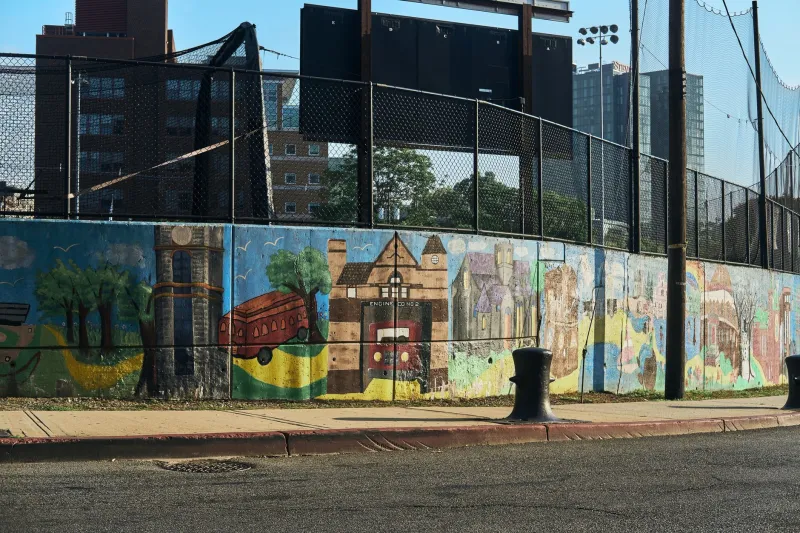
Take what happened in Greensboro, North Carolina, a few years back. Local muralist Tanya Osei had a vision for a massive, historically rooted piece honoring the city's civil rights legacy — something that could anchor a neighborhood undergoing rapid gentrification. She pitched it to a couple of arts foundations. She got polite rejections.
So she launched a Kickstarter, shared it in neighborhood Facebook groups, partnered with a local barbershop and a Black-owned bakery to host fundraising events, and started talking to people on the street. In six weeks, she raised $28,000 — nearly double her goal — from over 400 backers, most of whom lived within a few miles of the wall.
The mural went up. The neighborhood showed up to watch it happen. And when a developer later tried to paint over it during a renovation, those same 400 people made enough noise to stop it.
That's not just fundraising. That's community ownership of culture.
Patreon and the Slow-Burn Creative Economy
Kickstarter works great for one-time projects, but Patreon has become the engine for something different — the sustainable, ongoing creative practice. For artists who don't fit neatly into commercial categories, it's been genuinely life-changing.
Consider illustrator and zine-maker Carlos Reyes out of Albuquerque, who spent years trying to land licensing deals and gallery shows with limited success. He started a Patreon in 2020, initially expecting maybe 30 subscribers. Today he has over 1,200 patrons paying between $3 and $15 a month for early access to his work, process videos, and hand-mailed zines.
"I'm not rich," he told us, "but I'm making more than I ever did chasing institutional money, and I answer to my community, not a curator." That shift in accountability — from institution to community — keeps coming up in conversations with artists who've made this jump.
What This Means for the Creative Landscape
Here's what's genuinely exciting about this shift: community-funded art tends to reflect community values. When the people writing the checks live on the same streets as the artists, you get work that's rooted in real experience rather than what's currently trending in Chelsea or Silver Lake.
You also get more risk-taking, weirdly enough. Institutional funders are often conservative — they want proven track records and safe bets. But a crowdfunding campaign for an experimental sound installation or a neighborhood opera can succeed if it connects emotionally with enough people, regardless of whether it fits any existing genre.
There are real challenges, of course. Not every community has the same capacity to fund its artists. Crowdfunding tends to reward creators who are already good at marketing themselves online, which can replicate certain inequalities even as it disrupts others. And the labor of running a Patreon or a campaign can eat into actual creative time in brutal ways.
But the direction of travel feels undeniable. The old gatekeepers are losing their grip, and communities are discovering that they have both the desire and the ability to invest directly in the culture they want to see.
How to Get Involved Right Now
If you want to plug into this movement — whether as an artist or a supporter — the entry points are everywhere. Back a local creator's Kickstarter. Subscribe to a regional artist's Patreon for even $5 a month. Show up to a community fundraiser for a neighborhood arts project. Ask your local arts center if they have a community membership or giving circle.
The gallery system isn't going anywhere overnight. But every dollar that flows directly from a community to a creator is a small act of cultural sovereignty — and those acts are adding up to something that feels, from where we're standing, like a genuine movement.
Art has always been made by and for communities. We're just finally building the financial infrastructure to match that reality.