No One Showed Me the Door: The Quiet Crisis of Mentorship for Artists of Color
When Destiny Okafor moved to Chicago at 22 with a portfolio full of textile work and a head full of ambitions, she expected the city's arts scene to feel like a homecoming. Instead, it felt like showing up to a party where everyone already knew each other — and no one was making introductions.
"I'd go to gallery openings, submit to open calls, do everything you're supposed to do," she says. "But the people who could actually help me — who had the connections, the gallery relationships, the grant knowledge — they weren't in my circles. And I didn't know how to get into theirs."
Destiny's experience isn't an outlier. It's a pattern so common among emerging artists of color that arts educators and nonprofit directors have started calling it the mentorship gap — a structural chasm between the support systems available to white artists and those available to everyone else.
The Invisible Infrastructure of Artistic Success
Mentorship in the arts rarely looks like a formal program with application deadlines and matching algorithms. More often, it's a professor who makes a phone call on your behalf. It's a gallery owner who invites you to a dinner where the right collector happens to be seated across from you. It's someone handing you a grant application two weeks before the deadline because they were thinking of you.
That informal infrastructure — built on relationships, social proximity, and decades of accumulated access — is overwhelmingly concentrated in white, upper-middle-class networks. And when you're a first-generation college student, or you grew up in a neighborhood where no one had an MFA, or your parents didn't go to the right arts summer camp, you're starting the race three laps behind.
"The arts world likes to think of itself as a meritocracy," says Marcus Webb, director of a nonprofit arts incubator in Atlanta that specifically serves Black and Latino creators. "But merit doesn't exist in a vacuum. Talent is everywhere. Opportunity is not."
According to a 2022 report from the National Endowment for the Arts, artists of color remain significantly underrepresented in leadership roles at major cultural institutions — and the pipeline problem starts much earlier than the C-suite. It starts with who gets mentored, who gets introduced, and who gets told that a career in the arts is even possible.
What Formal Programs Get Wrong
It would be easy to assume that the solution is more formal mentorship programs. And plenty exist — from arts councils pairing emerging creators with established ones, to museum fellowship pipelines, to university residency tracks. But artists of color often describe these programs with a mixture of gratitude and frustration.
"A lot of these programs pair you with someone who's successful but doesn't really get your work," says Javier Reyes, a muralist and community organizer based in East Los Angeles. "They're matching you on discipline — like, okay, you're both visual artists — but they're not thinking about cultural context, about what it means to make work that comes from a specific community and speaks to that community."
The mismatch runs deeper than aesthetics. It often shows up in the advice itself. A mentor whose career was built on gallery representation in New York or L.A. may have little practical wisdom to offer an artist whose practice is rooted in public art, community engagement, or work that doesn't translate neatly into the commercial market.
There's also the emotional labor dimension. Artists of color in formal mentorship programs frequently report having to educate their mentors about their own experiences — explaining racism in the arts, justifying their subject matter, defending their community's relevance as an audience. That's not mentorship. That's unpaid consulting.
The Peer Circle Revolution
In response, a different model has been taking root — one that centers peer-to-peer community over top-down guidance.
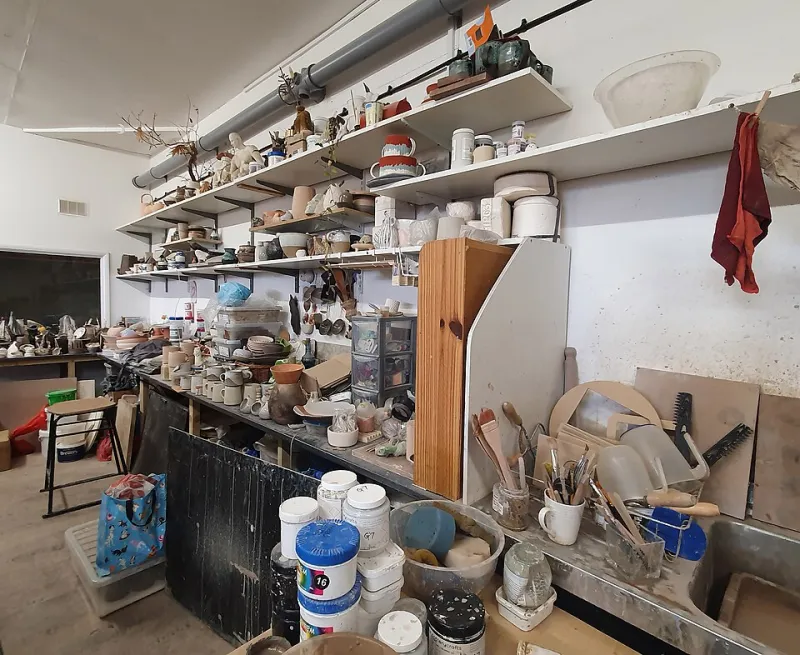
In Detroit, a collective of Black women visual artists meets monthly at a rotating host's studio. There's no formal agenda, no institutional affiliation, no grant funding. They share studio space when someone needs it, proofread each other's artist statements, talk through pricing negotiations, and occasionally just sit with each other when the creative work feels impossible.
"We stopped waiting for someone more established to come save us," says one member who asked to remain anonymous. "We became the mentors we needed."
Similar formations are popping up in cities and towns across the country — informal collectives, Discord servers, WhatsApp groups, community studio shares — all built on the principle that lateral support can be just as powerful as vertical mentorship, especially when vertical mentorship has historically been so hard to access.
Marcus Webb, back in Atlanta, has been watching this shift and trying to build formal infrastructure around it. His organization now runs what he calls a "constellation model" — rather than pairing each emerging artist with a single senior mentor, they build small cohorts of artists at different stages who meet regularly, share resources, and collectively navigate everything from grant applications to gallery pitches.
"It's not about one person having all the answers," he says. "It's about building the kind of community where the answers live collectively."
What Institutions Owe This Moment
Grassroots solutions are powerful, but they shouldn't let institutions off the hook. Arts organizations, universities, and cultural foundations have real resources and real responsibility here.
Some are starting to show up differently. A growing number of arts councils are funding mentorship specifically for BIPOC artists, with matching processes that account for cultural alignment, not just disciplinary overlap. Some universities are hiring artists of color specifically into mentorship and advising roles, recognizing that representation in those positions changes what's possible for students who look like them.
But there's still a massive gap between what's available and what's needed — and that gap has real consequences. It means talented artists leaving creative fields entirely. It means whole aesthetic traditions and community stories going unrecorded and unshared. It means an arts world that keeps congratulating itself on diversity while quietly maintaining the same old gatekeeping.
Destiny Okafor eventually found her people — through a community textile collective she stumbled onto through a friend of a friend. She's been part of it for three years now, and she's started mentoring younger artists herself.
"I think about all the years I spent trying to get into rooms that weren't built for me," she says. "Now I'm just trying to build better rooms."
That impulse — to build better rooms — might be the most important creative act happening in American arts right now. And it deserves every bit of support communities can offer.