Stop Glorifying the All-Nighter: Arts Communities and the Hustle Culture They Need to Outgrow
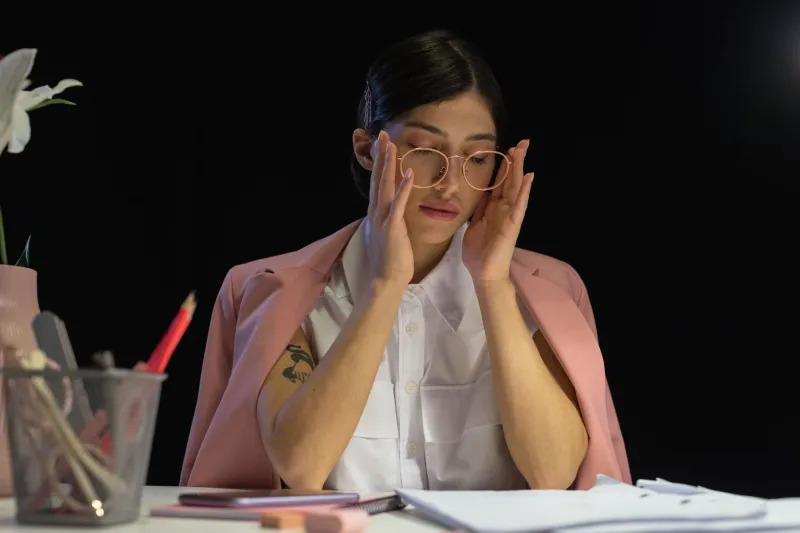
Somewhere around 2 AM on a Tuesday, a painter in a shared studio posts a photo of her workspace to Instagram. Coffee cup. Scattered brushes. The glow of a work light on a half-finished canvas. The caption: the only hours that feel real. It gets 400 likes from other artists who recognize the feeling.
This is a completely understandable moment. Late-night creative flow is a real phenomenon. The quiet of off-hours can genuinely free something up in the brain. But zoom out from that single post and look at the broader cultural ecosystem it exists within — the way arts communities celebrate exhaustion as evidence of dedication, the way "I haven't slept" functions as a credential — and something more troubling comes into focus.
We have built creative communities that run on a mythology of unsustainable labor. And we're paying for it in ways we're only beginning to honestly name.
The Badge of the Burning Artist
The romantic image of the suffering, sleepless artist predates social media by centuries. But digital platforms have given it new velocity and new social function. The all-nighter is no longer just a personal experience — it's content. It's proof of seriousness. It's a signal to peers and gatekeepers alike that you want it badly enough to wreck yourself for it.
Arts organizations and creative communities often reinforce this dynamic without meaning to. Events get scheduled at 9 PM on weeknights. Studio residencies run on grant cycles that require massive output in compressed timelines with little support infrastructure. Volunteer opportunities at arts nonprofits are described in terms that would be illegal in a job posting — unlimited hours, constant availability, compensation in "experience" and "exposure."
The message, delivered consistently enough, lands: real artists don't have limits. Real commitment looks like sacrifice. If you need sleep, boundaries, or a predictable schedule, maybe this isn't for you.
"I internalized that message completely for about seven years," says Tomás Rivera, a muralist and community arts educator based in San Antonio. "I thought the exhaustion was the point. Like, if it wasn't hard and depleting, it wasn't real. It took a pretty serious health crisis for me to question whether that was actually true or whether I'd just been trained to believe it."
Who Gets Hurt When Hustle Is the Standard
Beyond the individual cost to any given artist, hustle culture in creative communities has a structural exclusion problem that doesn't get discussed enough.
The artists best positioned to operate at maximum output, minimum sleep, and constant availability are, broadly speaking, the ones with the fewest competing demands on their time and bodies. That demographic skews young, skews able-bodied, skews toward people without caregiving responsibilities, and skews toward people with enough financial cushion that burning out doesn't immediately translate into losing their housing.
Artists who are parenting, managing chronic illness or disability, working multiple jobs to survive, or simply older than thirty-five often cannot perform the hustle aesthetic — not because they're less committed, but because the arithmetic of their lives doesn't allow it. When hustle is the standard, they get read as less serious, less dedicated, less deserving of the opportunities that go to people who can perform exhaustion convincingly.
Sierra Johnson, a fiber artist and mother of two in Minneapolis, describes a residency she applied for and was passed over for despite strong work. "The feedback I got was vague — something about 'commitment to the program.' But when I looked at who got selected, they were all people who could basically disappear into the studio for three months. I couldn't do that. I had kids. That's not less commitment. That's a different life circumstance."
The distinction between commitment and availability is one that arts organizations rarely make explicitly — and the failure to make it has real consequences for who gets access to development opportunities.
The Community Dimension
This isn't just a problem for individual artists. It shapes the texture of creative communities as a whole.
When the most visible, most celebrated members of a creative community are the ones operating at the most unsustainable pace, it sets a norm. New members — especially younger artists still forming their relationship to creative practice — absorb that norm as the definition of what it means to be serious. They start calibrating their own output against an impossible standard, often without realizing that the people they're comparing themselves to are either privately struggling or have structural advantages that make the pace temporarily sustainable.
The result is a community culture that generates a lot of impressive output for a few years and then watches its members burn out, drop off, and disappear — only to be replaced by the next wave of people who haven't yet learned that the pace is unsustainable.
"I've watched this cycle play out in three different organizations I've been part of," says Keisha Donnelly, an arts administrator and facilitator in Atlanta. "You get this incredible burst of energy, everyone's on fire, the work is amazing. And then, eighteen months later, half the people are gone. Not because the work stopped mattering. Because the people stopped being able to sustain it."
Donnelly has started incorporating what she calls "pace conversations" into the onboarding process for new arts initiatives she works with. "We talk explicitly about what sustainable engagement looks like for different people in different life circumstances. We name the fact that the most vocal, most present people in a community are not necessarily the most committed — they're often just the most available. And available is not the same thing as dedicated."
What a Different Model Looks Like
Some arts organizations are actively experimenting with structures that push back against hustle culture — and finding that the work doesn't suffer for it.
The Watershed Collective, a community arts space in Portland, Oregon, implemented a "contribution ceiling" a few years ago: a soft limit on the number of hours any single member can volunteer in a given month, designed specifically to prevent the over-contribution that leads to burnout and resentment. It felt counterintuitive at first. It worked.
"When you cap how much any one person can give, you force the organization to distribute the work more broadly," says one of the collective's founding members. "And you send a message to your community that you don't want to extract everything from people. That message matters. It changes who feels welcome."
Other organizations have started building explicit recovery time into project cycles — periods after major events or installations where members are actively encouraged not to produce, not to plan, not to be available. Some have moved recurring meetings to daytime hours and made childcare stipends a line item in their budgets. Small things, but they signal a different set of values.
Creativity Doesn't Require Sacrifice
The mythology of the suffering artist is seductive partly because it contains a kernel of truth: making meaningful work is hard. It requires real dedication, real investment, real willingness to sit with difficulty. But there's a difference between the productive difficulty of genuine creative challenge and the performative difficulty of running yourself into the ground to prove you care.
Arts communities that want to be genuinely inclusive — not just demographically but in terms of the full range of human circumstances — need to examine the signals they send about what commitment looks like. Because right now, a lot of those signals are saying: this is only for people who can afford to burn.
And the artists who can't afford to burn are often the ones whose perspectives, experiences, and work the community needs most.