Check Out a Cello, Fire a Kiln: The Public Library Is America's Most Underrated Arts Venue
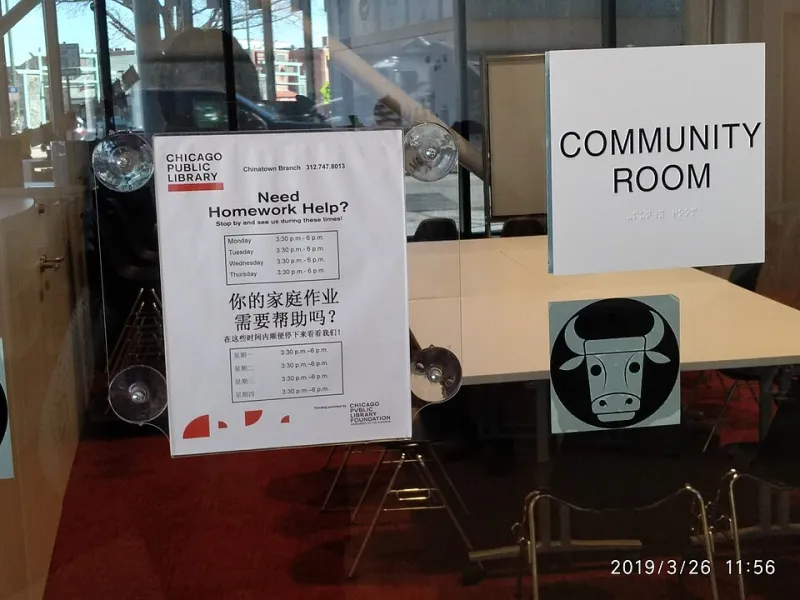
Photo: AfricanLibrarian, CC BY-SA 4.0, via Wikimedia Commons
Most people walk into a public library with a short mental list: books, a printer, maybe the bathroom. Ask them what else is in the building and you get a shrug. Which is a shame, because in a growing number of American towns and cities, that list now includes a sewing machine, a banjo, a podcast booth, a 3D printer, a set of woodworking tools, and — in a handful of lucky places — a kiln.
Nobody sent out a press release about this. There was no ribbon-cutting photo op that made national news. It just accumulated, branch by branch, as librarians noticed what their patrons kept asking for and started figuring out how to lend it.
The branch as a studio
The mechanics vary wildly by system. Some libraries run a “Library of Things,” where the catalog includes tools, cake pans, tripods, and occasionally a telescope. Some have built maker labs with laser cutters and embroidery machines. A few big-city systems have gone further: recording studios you can book by the hour, instrument collections you can borrow for a semester, gallery walls in the lobby that rotate local work, meeting rooms that function as rehearsal space for a community choir that has nowhere else to sing.
What ties it together is a single design principle that the arts world talks about constantly and implements unevenly: remove the application. There is no panel, no jury, no project narrative, no letter of support. The barrier to entry is a library card, which is free, and a willingness to return things on time.
For a ceramicist who cannot afford a kiln, or a teenager who wants to learn bass without asking her parents for four hundred dollars, or a retiree who has been meaning to try printmaking since 1998, that difference is not a convenience. It is the whole ballgame.
How librarians became arts infrastructure
Here's the uncomfortable part for those of us who fundraise for a living: libraries got here by being boring and reliable. They have buildings. They have insurance. They have staff who show up on Tuesdays. They have ADA compliance and a budget line and a phone number that a nervous first-timer can call.
Compare that to the average grassroots arts organization, which operates out of a rented room with a key that three people share and a website last updated during a previous administration.
Libraries also have something the arts sector chronically lacks: a baseline of public trust that does not need to be re-earned every fiscal year. People who would never set foot in a contemporary art space will absolutely walk into a library. They'll bring their kids. They'll stay for an hour. That's a wildly underused audience pipeline sitting right there, open seven days a week, with parking.
The catch nobody mentions
The programs are real. The staffing is not.
Most of the librarians running these collections are doing it on top of reference shifts, story time, and the daily work of being one of the last free public spaces in town. They are de facto arts administrators with no arts administration budget, no development officer, and no marketing team. That's why you'll find a fully equipped recording studio in a neighborhood where nobody knows it exists.
The other catch is maintenance. Instruments need repair. Kilns need elements replaced. Borrowed tools come back with a missing chuck. A Library of Things is a small asset-management operation, and it lives or dies on whether the system's budget treats it as core service or as a nice extra that gets cut first.
So when you find out your branch has a thing, use it. Loudly. Usage statistics are the argument that survives a budget hearing.
How to actually get in
A few practical notes, drawn from how these programs actually work:
Ask a person, not the website. Library search tools are built for books. A staff member can tell you in thirty seconds whether the branch has a laminator, who teaches the Wednesday sewing group, and whether the meeting room is booked through spring.
Look for the specific program name. Search your system's site for “Library of Things,” “maker,” “studio,” “instrument,” “seed library,” or “tool lending.” Many branches bury it three clicks deep.
Reserve early and behave. Popular equipment books out. Return things clean, complete, and on time. The fastest way to kill a lending program is a string of damaged returns that scares the administration.
Pitch a program, not a favor. Librarians are chronically short on free programming. Offer a workshop, a critique night, a repair clinic, a drop-in drawing hour. Bring your own supplies and your own audience and you will be welcomed like a relative.
Ask about the walls. Many branches have display space that sits empty because nobody asked. Ask what the process is, how long pieces stay up, and whether there's a reception budget.
Find the Friends. The Friends of the Library group is where the flexible money lives. That's the pot that buys the new kiln shelf or the extra mic stand.
The quiet equity argument
There's a version of arts funding that rewards people who already know how to write a proposal, which is a skill distributed almost perfectly along lines of class and education. The library model inverts that. It says: the equipment is here, the room is here, the hours are posted, walk in.
That's not a small thing. That's a different theory of who gets to make art in this country.
So the next time your city council debates a library budget and somebody calls a maker lab a frill, show up. Bring the kid with the bass. Bring the quilt that got finished in the meeting room. The most persuasive argument for a library's arts budget has always been a room full of people using it.